0
After-hours equine emergency providers in the region
Months
Typical wait for a routine large-animal appointment
Hours
Trailer transport to the nearest referral hospital
$53k+
In diagnostic equipment EOTTR has already secured

Our capital campaign donations will be going toward The Mobile Equine Emergency & Diagnostic Unit
On-site emergency, diagnostic, dental, surgical, and compassionate end-of-life care for the horses no one else will take — in a region with no equine emergency care at all.
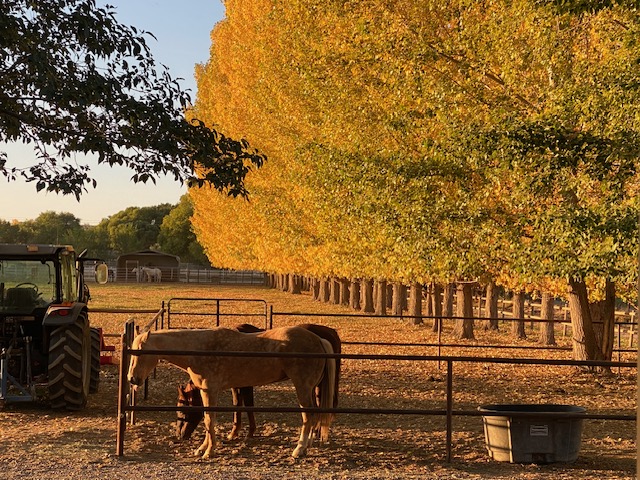
End of the Trail Rescue (EOTTR) is a lean, hands-on organization caring directly for horses recovered from severe abuse, neglect, and abandonment — including acute cruelty cases that other facilities refuse or cannot accomodate.
Our region faces a catastrophic shortage of large-animal veterinary care. Routine appointments take months to schedule, and there is no reliable after-hours or weekend emergency care for equine animals anywhere in the region. When a horse colics at midnight, there is no one to call.
Today, a fragile, compromised horse must be trailered for hours over mountain passes to Grand Junction, the Roaring Fork Valley, or Colorado State University — a journey that is traumatic, dangerous, and often fatal. EOTTR is launching a Mobile Veterinary Clinic & Emergency Unit: a self-contained, highly secure mobile trailer providing immediate diagnostic, dental, surgical, and compassionate end-of-life care on-site — for our own herd, and for the rural communities around us.
End of the Trail Rescue provides medical care, rehabilitation, and sanctuary for neglected, abandoned, and unwanted horse, while supporting the local families, ranchers, veterans, and low-income residents who struggle to access veterinary care for their animals.
After-hours equine emergency providers in the region
Typical wait for a routine large-animal appointment
Trailer transport to the nearest referral hospital
In diagnostic equipment EOTTR has already secured
STATEMENT OF NEED
The sever shortage of large-animal practitioners in our rural ranching community has created an environment where basic and emergency care are nearly impossible to obtain.
The few practitioners who remain are so overextended that scheduling basic care takes months. There is no after-hours or weekend coverage. A midnight colic episode or severe injury means there is simply no one to call.
Forcing a suffering, structurally compromised animal onto a trailer for a multi-hour mountain journey to Grand Junction, Carbondale, or CSU is inherently dangerous and stressful — and frequently exacerbates pain or proves fatal en route.
In our ranching region, equine and livestock animals are too often viewed as commodities — used for labor or profit, then discarded when no longer viable. That systemic neglect is precisely why EOTTR operates at maximum capacity. We are the final safety net.
When medical intervention cannot save a horse, delayed care means agonizing, prolonged suffering. A primary purpose of this unit is ensuring horses can be humanely put to sleep on-site — free of pain, panic, or the stress of transit.
This is, at its core, a life-or-death infrastructure gap. Every capability in this proposal — diagnostic, surgery, dentistry, end-of-life care — exists today only on the far side of a mountain pass.
PROJECT PLAN
Rather than investing prematurely in a permanent, custom-built facility, EOTTR is executing a disciplined mobile-first approach. We are acquiring a fully equipped medical trailer that functions as an immediate, on-site surgical and diagnostic clinic — housing the advanced equipment EOTTR has already procured, including our own digital radiography system, alongside newly requested medical infrastructure.
The foremost concern with any mobile veterinary unit is the secure storage of regulated euthanasia drugs ad sedatives. This is not new ground for EOTTR; we already operate a locked facility on-site with a medication safe in daily use. The mobile unit simply extends that established protocol into a strict containment loop:
Deploy for targeted operations
The trailer travels to Olathe and surrounding sites only for scheduled medical operations and emergencies.
Return directly after use
Immediately following each deployment, the unit is towed back to the main EOTTR facility — never left in the field.
Medications leave the trailer
At the end of every shift, all medications are removed from the unit and secured in a locked safe behind a locked, deadbolted door — while the trailer itself parks behind heavy-duty security gates under 24/7 HD camera surveillance.
This funding allows EOTTR to break its reliance on overextended local clinics by bringing dedicated medical professionals into our own ecosystem:
A dedicated internal veterinarian
Hiring a veterinarian solely focused on the health, rehabilitation, and — when nothing more can be done — the swift, painless end-of-life care of EOTTR’s horses.
A certified vet tech under protocol
If the rural veterinary shortage stalls recruitment, funds secure a certified vet tech operating on-site under a collaborative supervisory — legally cleared to administer emergency and euthanasia medications under direct protocols.
INVESTMENT FRAMEWORK
EOTTR has already invested in the diagnostic core of this clinic. Comprehensive project support completes the mobile infrastructure, staffs it with dedicated medical professionals, and funds the urgent treatment of recovered horses.
| CATEGORY | DESCRIPTION | ESTIMATE | STATUS |
|---|
Diagnostic Equipment
Digital radiography system (generator, plate, viewing tablet, vests), blood centrifuge and lab supplies, rolling clinical table — contributed in-kind
$53,900
SECURED
Mobile Clinical Infrastructure
Fully equipped medical trailer with exam, lab, and surgical suite; reinforcement, security locking mechanisms, and hitching systems
$145,000 – $250,000
REQUESTED
Clinical & Diagnostic Equipment
Ultrasound system ($22,860); dental speculum, NG tubes and pump, IV set-ups, microscope, hoof tester — the remaining inventory items
$28,000
REQUESTED
Security Infrastructure
Perimeter gating and HD surveillance reinforcing the locked facility and medication safe already in use
$15,000 – $25,000
REQUESTED
Staffing & Operations
Year-one salary for a dedicated veterinarian (or certified vet tech under supervisory protocol) plus compliance costs
$110,000 – $120,000
REQUESTED
Direct Animal Care
Urgent treatments, pharmaceuticals, lab fees, and surgical interventions for recovered horses
$75,000 – $100,000
REQUESTED
Comprehensive Project Investment
$400,000 – $500,000
Every dollar of this investment converts an impossible distance into immediate care — for our horses, and for the valley around them.